
 Gym business
How to increase your gym's revenue
Recruiting, retaining, filling quiet hours, growing add-on revenue: the seven levers that genuinely move the needle on a gym's revenue, in order of impact.
5 min read
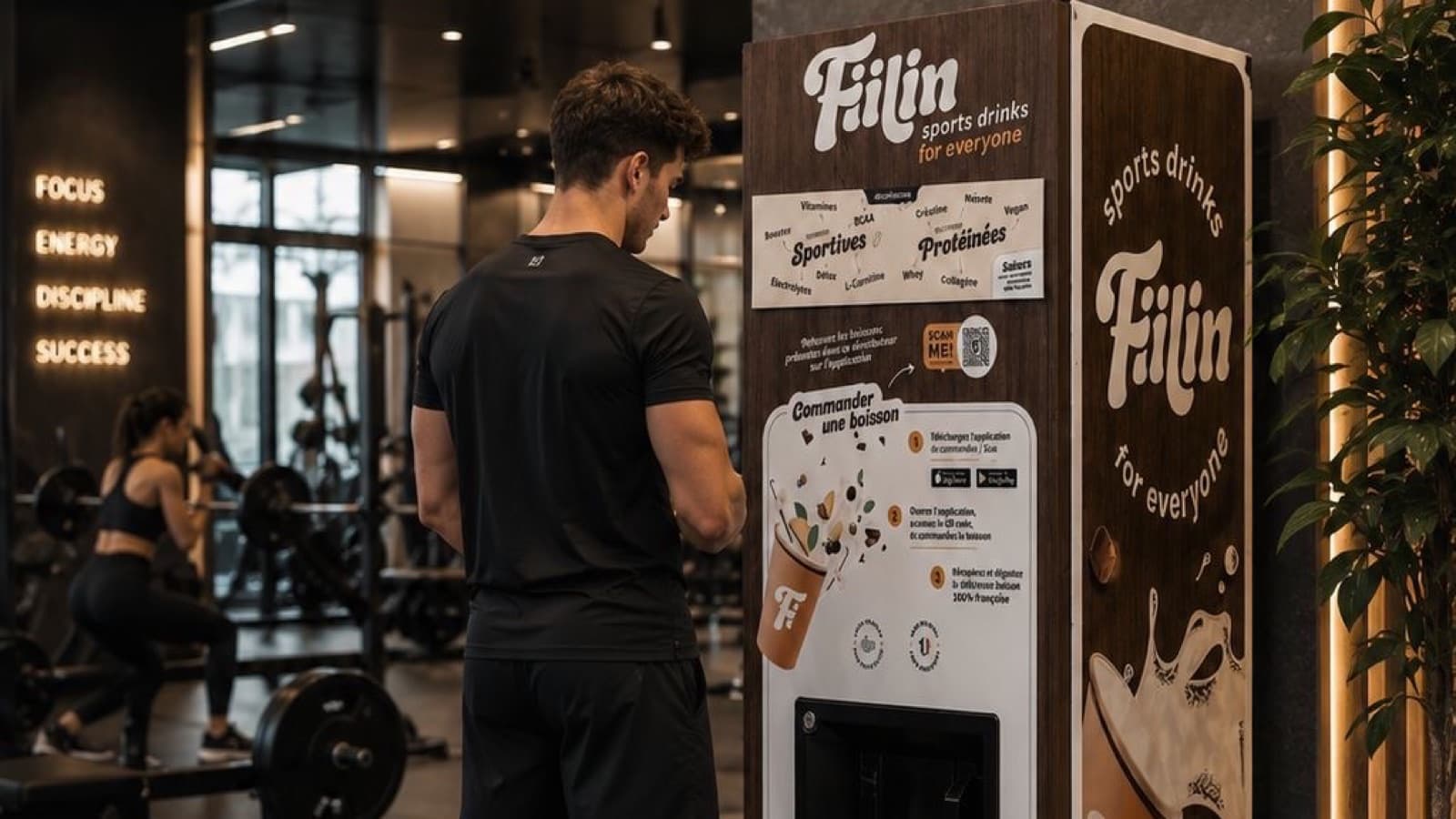
The same scene plays out in every gym: the session ends, the member is thirsty, wants their protein fix… and leaves empty-handed. They will buy a drink at the supermarket, order whey online or go without. In the first two cases the money is still spent. It is just spent outside your gym.
Offering sports drinks on site meets that need at the exact moment it appears. You still have to pick the right format, though: a fridge, a staffed bar, a vending machine or a machine that prepares drinks on demand differ in cost, in workload and in image. This guide walks through the options and gives you the criteria to decide.
Gym owners who take the step tend to give three reasons.
It is the simplest option: a glass-door fridge, bottled protein or isotonic drinks, and a till or card reader at reception. Its limits are clear, though. You have to manage stock, watch expiry dates and tie up cash in products that will not all sell. Single-serve bottles create plastic waste, the choice stays narrow and margins are often thin, because the product arrives already packaged by a manufacturer.
A counter, a few tubs of powder, a blender: your team makes drinks to order. The upside is freshness and a friendly touch. The downside is just as clear: every drink takes a member of staff, service stops when reception is swamped or closed, dosing varies from one person to the next, and keeping the equipment clean becomes one more chore. For a gym open late or with unstaffed hours, the model quickly hits its limits.
Snack machines run on their own and take payment without staff. But they are built for cans, bars and bottles, not for powders that need mixing. They reproduce the limits of the fridge (generic products, packaging, little differentiation), with a train-station look that sits badly in a premium gym.
This is the newest category. The machine stores powders and prepares each drink to order, mixing the exact dose with filtered water. It combines the autonomy of a vending machine with the freshness of a bar: nothing is made in advance, dosing is consistent and your team only needs to top up the hoppers now and then. In return it needs a spot with a power socket and a water supply.
Whatever format you are considering, eight questions let you compare offers on concrete grounds.
Buying gives you full ownership of the machine, but ties up significant capital and leaves maintenance, breakdowns and the ageing of both hardware and software on your plate.
Renting turns that investment into a predictable monthly fee. In a well-designed offer, the rent covers installation, maintenance, parts, labour and software updates. For a gym, it is often the safest way to trial a new service: the cost is known upfront and the technical risk sits with the supplier.
Allow roughly half a day on site, including hookup and a handover to your team.
The Fiilin dispenser belongs to the fourth category. It is rented, never sold, and makes drinks in 30 seconds from measured powders and filtered water, with no single-use plastic bottle. Eight recipe families cover members' needs: whey, creatine, BCAA, L-carnitine, pre-workout, electrolytes, detox and collagen. All are formulated and made in France and comply with the AFNOR NF V 94-001 standard.
For the gym, the model is simple. You pay a monthly rent and buy refills wholesale. You set your own retail prices and keep 100% of the takings, with no commission. Members order and pay in the app, and the dispenser connects to the main management software on the market (Deciplus, Resamania, Heitz, Sportigo, bsport) so drinks can be built into your plans. The machine's wrap can be customised in your colours.
To go further, see the dispenser in detail, our offer for gyms or the full profitability calculation.
Want to see the dispenser at work in a gym like yours? Book a 20-minute demo.
Last updated September 10, 2026.
Installation, maintenance and restocking included. We'll show you how it works in 20 minutes.
Gym businessRecruiting, retaining, filling quiet hours, growing add-on revenue: the seven levers that genuinely move the needle on a gym's revenue, in order of impact.
 Gym business
Trial offers, referrals, local SEO, social media and standout services: the levers that fill a gym and keep it full month after month.
 Gym business
Picking your platforms, holding a posting rhythm, filming your members and measuring what converts: a workable social method for a gym.